
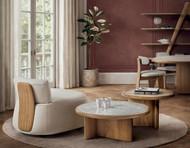
Riva 1920 Furniture: Solid Wood, Natural Finishes, and Wood With a Past
Oct 30th 2026
Riva 1920 furniture is built from solid wood, finished with natural oils and waxes, and made to be handed down. For more than a century the company has worked in Cantù, in Italy's Brianza district, refining a single idea: the wood on the surface of a piece should be the wood all the way through.
That idea shapes everything in the Riva 1920 collection at Mondo Collection, from a dovetailed dresser to a coffee table cut from wood buried for millennia. This guide covers the history, the materials, and the pieces that show them best.
A family workshop in Cantù since 1920
Riva 1920 began as a small artisan workshop founded by Nino Romano in 1920, making classic furniture in solid wood. In the 1940s his son-in-law, Mario Riva, took the business forward, followed in the late 1970s by Maurizio and Davide Riva.
The brothers turned the company toward custom work and introduced the natural wax and oil finishes that remain its signature. Riva 1920 first showed at the Milan International Furniture Fair in 1992. In 2010 it completed the Riva Center in Cantù, designed by Renzo Piano Building Workshop, which houses the company's collection and a Wood Museum.
Solid wood, built to last
Most Riva 1920 pieces are offered in solid walnut, cherry, maple, or oak, and construction follows cabinetmaking tradition rather than shortcuts. The details are visible in the pieces themselves.
• The Kyoto Dresser uses dovetail joints, with each drawer made, assembled, and tested individually. The drawer grip is a lip cut into the front, so no hardware interrupts the wood. The matching Kyoto Bedside Table follows the same construction.
• The Night-Night Bench is made entirely of solid American walnut and assembled with wooden dowel pins. It contains no metal.
• The Piano Design Chair is also assembled without metal, with a carved seat and an inclined back.
• The Sleek Dining Table joins its legs to the top with dovetail joints and is offered in ten sizes.
Finishing is equally deliberate. Pieces such as the Boss Basic Coffee Table are hand-finished with an oil and natural wax of vegetable origin with pine extracts. Because the wood is untreated, small movements and changes in its appearance over time are part of its character.
Wood with a past: Kauri and Venetian briccole
Alongside timber from planned harvests, Riva 1920 works with reclaimed woods that carry their own history.
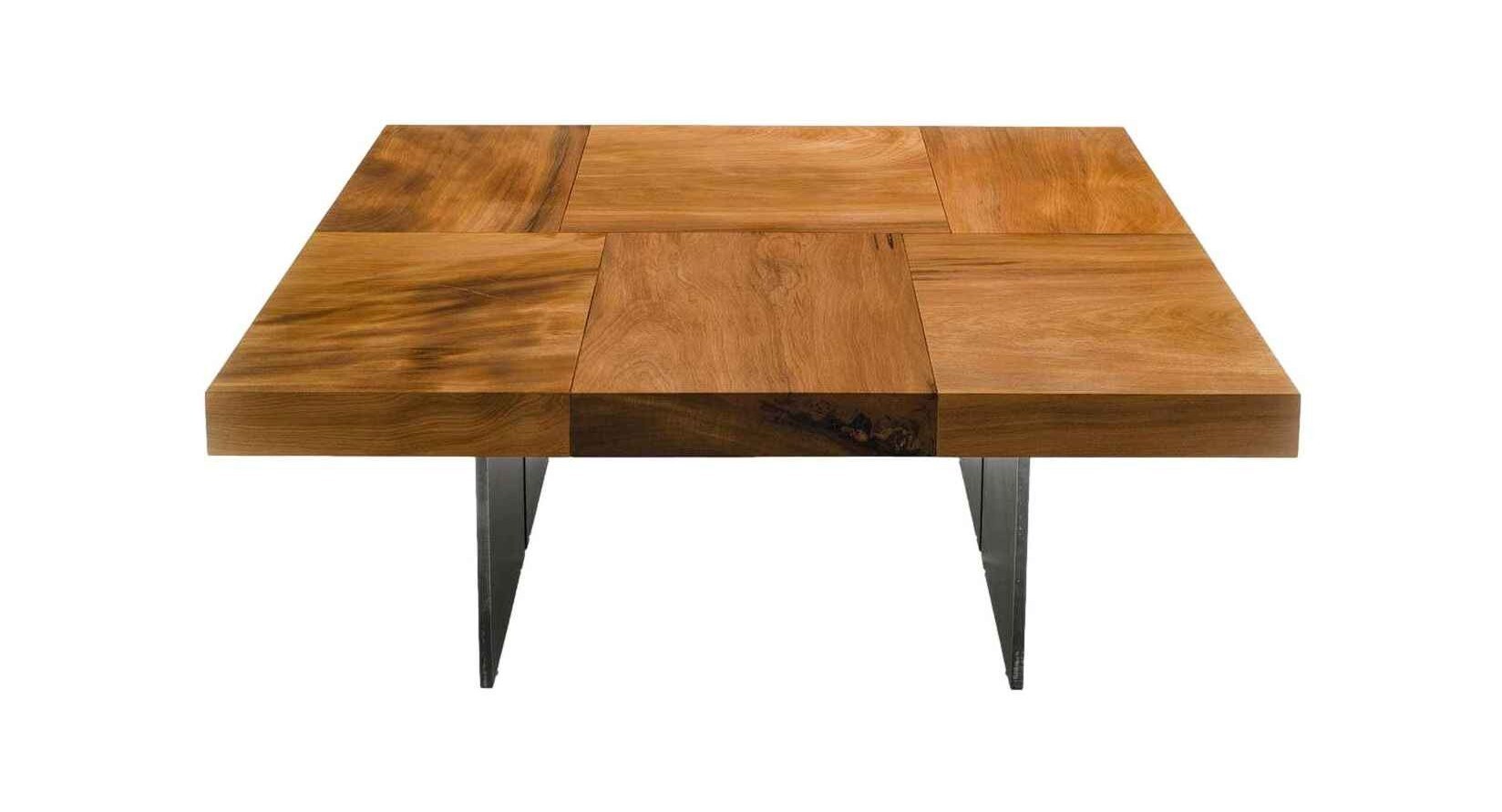
Kauri. Harvested from ancient trees preserved in New Zealand swamps, Kauri wood can be up to 50,000 years old. Its deep grain is the centerpiece of the Auckland Block Kauri Coffee Table, a solid Kauri top on a metal base, offered in four standard sizes and custom dimensions.
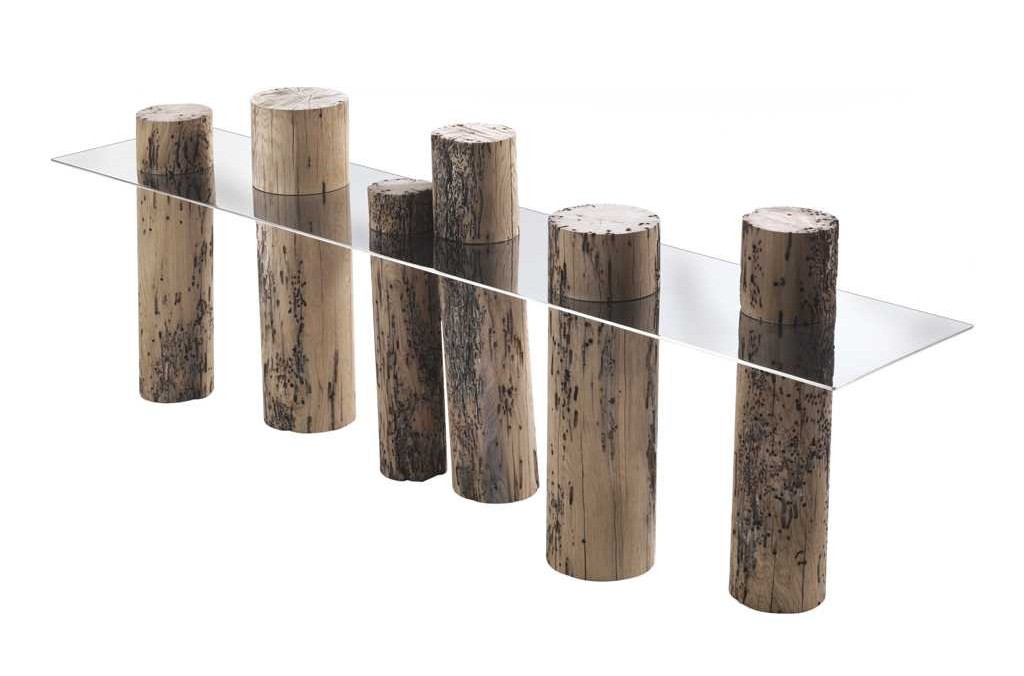
Briccole. These are the timber mooring posts of the Venetian lagoon, shaped and worn by years in the water before they are reclaimed. Riva 1920 gives them a second life across the collection:
• The Bricolages Side Table, an homage to Brancusi.
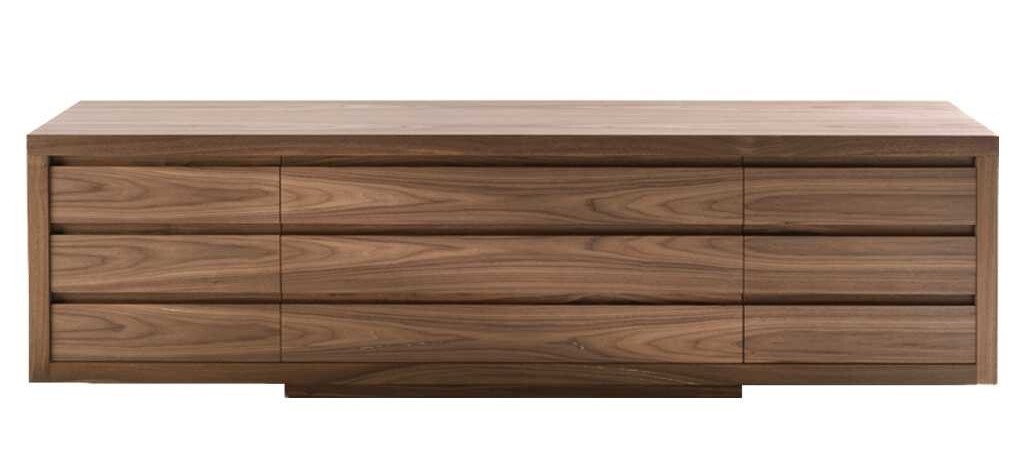
• The Rialto Low Board, with drawers made from reclaimed briccole.
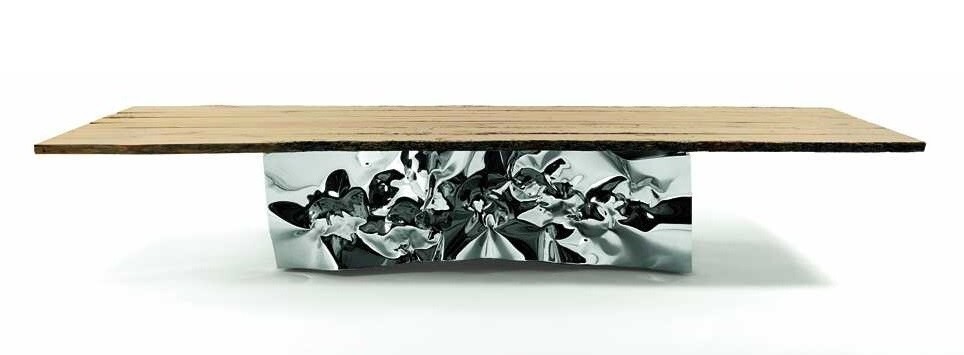
• The Venice Console, with briccole posts reflected on a polished stainless steel plate.
• The Riflessi in Laguna Dining Table, a briccole top that evokes the Venetian docks and their reflection in the lagoon. Each table is unique.
Cedar for indoor and outdoor spaces
Riva 1920's cedar pieces are cut from scented solid cedar and hand-finished without toxic treatments, which makes them suitable both indoors and out. Left outside, natural cedar weathers to a silver gray.
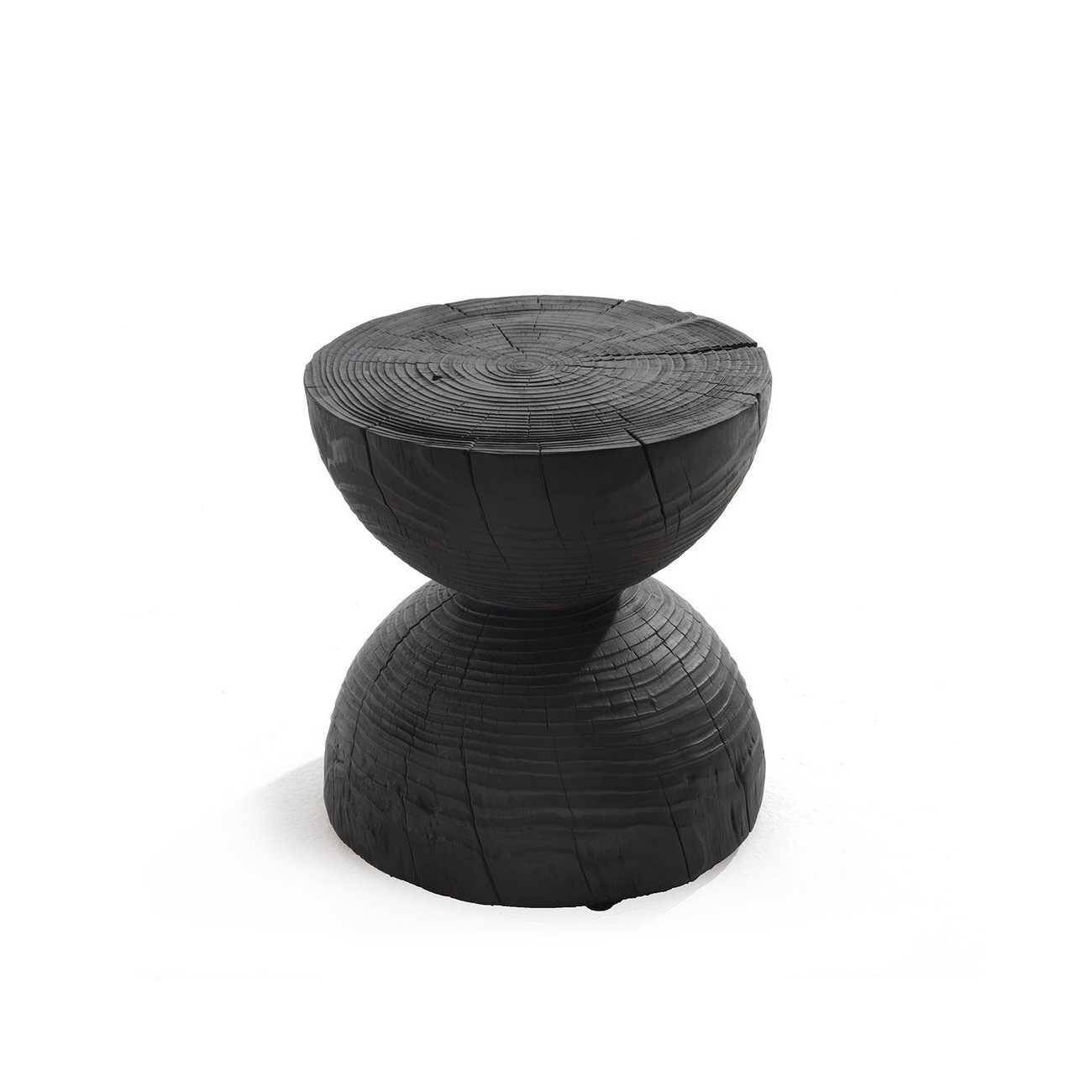
• The Clessidra Indoor/Outdoor Stool, designed by Mario Botta, is carved from a single block of cedar. Its hourglass shape works as a seat or, stacked, as a modular sculpture.
• The Curve Indoor/Outdoor Bench is cut from a single block, with a sinuous form beneath the seat that shows the grain.
• The Molletta Indoor/Outdoor Bench is scaled for gardens and large interiors, where it reads as a sculptural element.
• The Creus Indoor/Outdoor Chair sets a cedar body on a revolving base, with optional leather cushions.
Designers and made-to-measure pieces
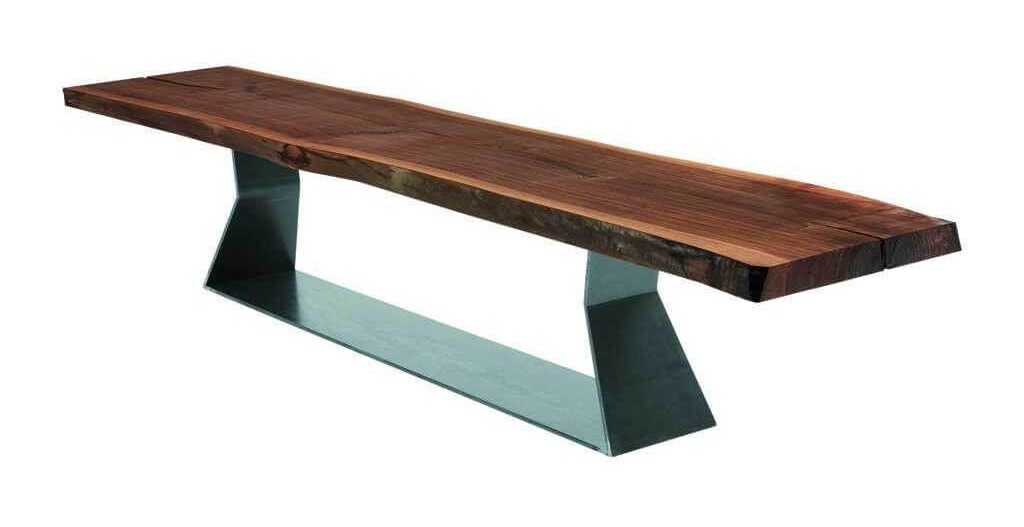
Riva 1920 works with architects and designers, and much of the collection can be adapted to a specific space. Terry Dwan designed the Bedrock Bench, a 1.5-inch solid walnut seat with natural edges on an iron base. Mario Botta designed the Clessidra stool.
Customization runs through the collection. The Freedom Bookshelf is a modular system built from two standard sizes. The Sipario Modular Media System is customizable in dimensions and wood. The Patmos Sofa can be customized in size. For architects and interior designers, this makes Riva 1920 a practical choice for residential and hospitality projects alike.
Frequently asked questions
Where is Riva 1920 furniture made?
In Cantù, in the Brianza furniture district of northern Italy, where the company has worked since 1920.
What woods does Riva 1920 use?
Most pieces are offered in solid walnut, cherry, maple, or oak. The collection also includes cedar and reclaimed woods: ancient New Zealand Kauri and briccole from the Venetian lagoon.
How is Riva 1920 furniture finished?
With natural oils and waxes rather than synthetic coatings. Many pieces use an oil and natural wax of vegetable origin with pine extracts.
Can Riva 1920 furniture be used outdoors?
The cedar pieces can. Natural cedar is suitable for outdoor use and weathers to a silver gray over time.
Can Riva 1920 pieces be customized?
Many can, in size, wood, or configuration. Each product page lists the available options.
The full Riva 1920 collection is available at Mondo Collection. For specification sheets, available finishes, pricing, and lead times, contact us.